Monday, May 2, 2016

May Day Pariscope

may-day-in-paris-2002-001Sorry about last week’s Pariscope walk. That was a bit of a bust because it rained all weekend and Leo was sick with a cold. So we wound up staying at home, playing with the cats, and eating scrambled eggs. It wouldn’t have been very interesting to broadcast that live.
But today, for the first time, we’re going to use this Periscope thingamajigger to do real journalism. Because today is May Day — the International Day of Laborers and the Working Classes promoted by the labor movement, anarchists, socialists, and communists, as well as an ancient European spring holiday — celebrated without irony and with a large cohort of riot police everywhere in the world but America, where we will never be so over the Cold War that we can use the phrase “International Workers Day” with a straight face. The weather report says it will be sunny and fine, so this should be a colorful day indeed for journalists such as ourselves.
May Day’s an extremely significant holiday in France. As important as Thanksgiving in the US. And almost everywhere in the world, May Day means journalists can sell stuff. What kind of stuff? No one knows, but even no news is worth a few bucks: “May Day was celebrated peacefully in Paris” is considered news. (That’s probably the only news we’ll get out of the day, but it’s still news. Guarantee you it will not be celebrated peacefully somewhere else. Probably Istanbul. I remember one year when the May Day celebrations there were, to everyone’s astonishment, totally peaceful — and that was news.)
Alas, May Day is May Night for most of you. All times below are Paris times. (Here’s a handy time-zone converter.) But if you’re afflicted with insomnia, or working the night shift — tune in! And if not, you can still watch the broadcasts later, when you wake up. But you won’t be able to ask questions or interact with me, which is a shame, because that’s my favorite part of this.
By the way, if you missed my earlier posts about this: Periscope is an app that lets me livestream what I’m seeing and interact with viewers in real time. Here’s the info page, and here’s where you follow my broadcasts.
So here are some of the things we might see today:
MuguetsFirst, May 1 has been a day for celebrating old French customs since King Charles IX received a gift of flowers on May 1 in 1561. So you’ll see people buying muguets to give to their loved ones. If you do that, it brings good luck. Families with children sometimes even get up early in the morning and go into the woods to pick them.
Second, although I doubt we’ll be able to get near it because of the crowds, there’s a wreath-laying ceremony at noon at the Arc de Triomphe, and then there will be a parade on the Champs Elysee.
Third, all the churches and the Panthéon will be open. Sunday Mass starts at 11:00 a.m. at most of them. But think I can only do about an hour of broadcasting in total before the battery runs out, so I’m not sure we’ll have time for the detour. It all depends what you want to see.
Fourth, May Day in Paris is traditionally a day for massive union demonstrations and parades. Each political party sponsors its own unions. We’ll see workers of the world uniting, socialists, communists, and lots of politicians trying to be out in front of them for the cameras. These should be particularly pugnacious this year, because the unions have been going absolutely berserk about the proposed new labor laws. You may even get a chance to see people in France singing The Internationale unironically.
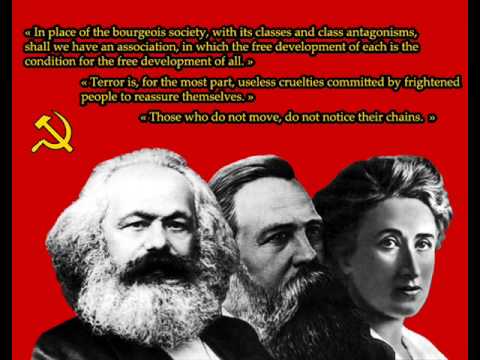
The traditional route for Left-wing parades is from République to (of course) the Bastille, and then, if the march is big enough, to Nation. There will be lots of rallies and speeches all over the city, mostly for causes of which we’d disapprove, but these are the main ones:
At 3:00 pm, the left and the hard-left start their march at the Bastille. Recently, the Nuit Debout movement has been gaining strength. We can find them there, I reckon. If you’ve got any questions for Nuit Debout people but you won’t be awake then, leave them in the comments, I’ll ask for you.
mapAt 11:00 a.m., the libertarians and the anarch0-syndicalists will begin their march for “a social revolution and libertarianism” and against the government’s austerity program. (What does it mean to be a libertarian in France, you ask? Hell if I know; that sure doesn’t sound like something any libertarian we know would do, does it? But they’ll all be there today, so let’s just ask them.) They start at 11:00 am at the Place des Fêtes, and head toward the Bastille.
Only problem is that there are a few scheduling conflicts. See below.
From 11:00 am to noon, there’s an antifascist rally in memory of Brahim Bouarram, a Moroccan father of two who was murdered by the National Front on a previous May Day, at the Pont du Carrousel.
Fifth, May Day is also counter-rally and counter-parade day for the National Front. This year, there will be two competing National Front events to commemorate the day: a traditional rally, led by the elder Le Pen, and a “Great Patriotic Banquet” led by his enemy and mortal rival — his daughter Marine. Usually, the far-right parade goes from Opéra to the statue of Jeanne d’Arc near the Place de la Concorde. But this year, things will be a little different. France24 explains:
France’s far-right National Front party has shifted its annual May 1 gathering from its usual spot at a statue of Joan of Arc in central Paris to another location, citing a terrorist threat.
Jean-Marie Le Pen, the firebrand founder of the National Front (FN), has organised his own rally at the traditional spot in defiance of his daughter Marine’s decision to host the event elsewhere in Paris.
If we go, and actually, I’d really like to see this — I’ve never seen the Old Boy speak — we’ll be going to the traditional one (at 11:00 am local time), because Marine’s banquet is invitation-only.
The annual FN gathering has taken place every year since 1988 at the gilded bronze statue of French heroine Joan of Arc (who was burned at the stake for heresy by the English in 1431) on Rue de Rivoli next to the Louvre Museum.
But this year, prompted by jihadist threats to the “idolatrous” annual gathering of anti-European and anti-immigration FN supporters, the venue has been shifted to another statue of Joan of Arc, this time at Saint Augustin, less than two kilometers away.
jm-lepen.jpeg
Because this is a family-friendly site, I won’t show you the other gate-crashers.
The one at Saint Augustin is just a wreath-laying. No speechifying, they’re saving that for the banquet. But the real reason they moved the rally isn’t because ISIS threatened it. It’s because last year, Marine (the daughter) totally lost control of it. She’d just placed a spray of lilies and roses at the foot of Joan of Arc’s gilded statue when a bunch of nekkid Femen chicks burst onto the scene. And if that wasn’t mood-ruining enough, out of nowhere her embarrassing father ambushed her. The Old Boy was supposed to be safely in the hospital, recovering from heart surgery, but he materialized exuberantly, clambered up on the stage, ruddy and demented, and began shaking his fists in defiance. Marine just couldn’t catch a break.
So this year, she’s having an invitation-only Great Patriotic Banquet and leaving Pops to be blown up by ISIS:
The nature of Sunday’s official rally has also changed. The Rivoli gathering traditionally sees FN supporters marching to nearby Opéra after speeches by party leaders.
This year, however, the event at Saint Augustin will be a stationary “patriotic banquet” in the shadow of St Joan (she was canonized in 1920).
“Daesh [Islamic State group] has directly threatened the FN,” said party lawmaker Gilber Collard in reference to a recently-published article in a jihadist magazine that described the FN rally as a “prime target.” “We do not want to risk the safety of our militants.”
Daesh has threatened to blow up everyone in France, so really there’s nothing special about them threatening to blow up an FN rally. Everyone understands the real logic of this. No photos of Marine ahead of the 2017 elections with a bunch of nekkid ladies and her crazy Pops, period. 
But it wasn’t just safety issues that caused the change in venue. In 2015, Jean-Marie le Pen was removed from the list of speakers at the May 1 event, but appeared on stage anyway in chaotic scenes that many saw as a purposeful attempt to undermine his daughter’s legitimacy.
“I think that was a malicious act, I think it was an act of contempt towards me,” Marine Le Pen, who took over the party leadership in 2011, told French radio after the event.
No kidding, Marine. (This family is straight out of King Lear.)
“I get the feeling that he can’t stand that the National Front continues to exist when he no longer heads it,” she said.
It’s true, he can’t. It drives him nuts. He’ll do everything in his power to sabotage her.
Indeed, Jean-Marie Le Pen, who has been convicted for making anti-Semitic comments, inciting racial hatred and for Holocaust denial, has become a growing problem for the FN as it tries to move its public image away from the overt racism and anti-Semitism of its beginnings.
Jean-Marie Le Pen has not been invited to the “patriotic banquet.” He told Metronews he wouldn’t deign to go to what will be a tightly-controlled and watered-down rally, even if he was invited.
Instead, he has prepared a 40-minute speech that he will deliver to die-hard supporters at the Joan of Arc statue on Rue de Rivoli.
According to Metronews, Le Pen senior said, “I call all the people who are not afraid of Daech to meet before the statue of Joan of Arc on May 1, instead of the Pyramids, where I will address the yuuuuuge crowd of patriots who will, I am sure, respond to my appeal.” (Read: If you go to my daughter’s rally, you’re a complete wuss.) “Il n’y aura pas de place pour les pleutres et pour les lâches,” he said. “There will be no room for spineless people and cowards.”
“I want to maintain this FN tradition started 28 years ago,” he said, referring to his daughter as “Madame Le Pen” who had “broken the tradition of marching from the statue of Joan of Arc, supposedly because of a Daesh threat.”
“I haven’t been invited [to the patriotic banquet] and I wouldn’t want to go,” he said.
“Despite this, what I desire, and what will be the subject of my speech on Sunday, is for the FN to unite ahead of the [presidential and legislative] elections of 2017,” added the man whose bellicose words and actions have done more to divide the party he founded than any other.
Recently, Marine has been posing in lots of photos with her cats to soften her Comme-Jean-Francois-Cope-Marine-Le-Pen-ouvre-un-blog-pour-preparer-2017-sans-reference-au-FNimage. These take on a somewhat different meaning when you know that last year, one of her father’s dogs devoured one of her cats. Yes, that is correct: Her father’s dog ate her favorite cat.
Anyway, Marine has threatened to excommunicate any FN supporter who goes to her father’s rally. She’s reportedly going to have spies in the crowd to see whether any of her faithful followers are betraying her. So let’s try not to miss that: Skinheads, spies, and the Old Boy whipping up the Party die-hards; that should give us a really good feeling for the old Front. Tune in at 10:00 a.m. Paris time. I’ve never seen the Old Boy live, so I’m looking forward to that.
By the way, the Old Boy’s a big Trump fan. He calls him “Don Trump.” I don’t know if his English is good enough for him to realize that this has a second meaning.
  1. Apr 21 Bravo à Don TRUMP pour sa belle victoire à New York, qui augure de la prochaine…
Don’t be alarmed if the broadcast starts and stops suddenly. It’s hard to concentrate on where you’re walking and what you’re filming at the same time, so if the crowds require me to pay some attention to what’s going on around me, I’ll just stop filming. (May Day is notorious for pickpocketing. This is also why I’ll be mean to the adorable little urchins who try to give me flowers. I don’t hate adorable little urchins with flowers. But I do hate their parents, who put them up to distracting people so they can pick their pockets.)
Don’t forget: I’m mailing signed, paperback copies of There is No Alternative: Why Margaret Thatcher Matters and Menace in Europe: Why the Continent’s Crisis is America’s, Too to everyone who contributes to my book campaign this weekend.
See you at the barricades!

Wednesday, April 27, 2016

Europe and Anarchy


AnarchyDraw back from the day-to-day news in Europe and think a bit about the wider trends, globally and regionally. Without a feeling for these, it’s harder to make sense of individual items in the news.
The eerie thing about Trump is that his campaign echoes so many themes of the so-called European far-right. I say “so-called,” because the word “right” confuses matters. These parties go beyond traditional left-right categories. I’d prefer to call them “Trumpist” or “Putinist” parties, and call their opponents, “traditional” or “establishment” parties.
Like Trump, these candidates tend to run on platforms of protecting very high levels of welfare and social spending. Thrift and budget discipline are not part of the program. Like Trump, they’re protectionist, anti-globalist, and thoroughly unimpressed by the blessings of free trade. Like Trump, they promise to limit or end immigration, and like Trump, they’re particularly concerned about Muslim immigration. Like Trump, they admire Vladimir Putin, and don’t see why there should be such a fuss about Ukraine.
They suggest that if voters are economically frustrated, it’s because the Establishment — be it the Acela corridor or the Eurostar corridor — is comprised of a bunch of Davos-brained idiots who’ve determined to rip them off, or permit them to be ripped off, or to destroy their national sovereignty. They hate and distrust the media. Like Trump, even if the candidates are not themselves anti-Semitic, they’re the candidates of choice for those who are. In Europe, these parties also tend to be anti-American.
Most people who vote for these parties have been on the losing side of globalization and technology change. If neoliberal trade regimes have benefitted anyone, it sure hasn’t been them.
What differs, of course, is the country that’s the star of the story. In every case, the candidates appeal to a time when his or her own country — be it the United States, France, Russia, or Great Britain — was “great,” “respected,” and less embedded in an international system that deprives it of sovereignty. (Obviously, if all of these countries become “great” again in the way these candidates suggest, this will be a planet with too many pigeons and not enough statues.)
Is the deeper story behind all of this the seemingly-eternal fallout of the financial and the Eurozone crises? Or is it something even bigger?
If you grew up reading Robert Kaplan’s thoughts about geopolitics, you’ll know that he’s been predicting anarchy since 1994, when he wrote his famous, Malthusian essay, “The Coming Anarchy.” I don’t always agree with him, but he’s a writer for whom I always have time. First, because he’s deeply learned. Second, because he gets out of his armchair and spends time in the places he writes about, a lot of time. He isn’t just building geopolitical models from the comfort of his mom’s basement. Third, because he’s a pessimist to the bone, which is of course the correct foundation for conservatism. So whenever things seem to be falling apart, I think, “Perhaps it’s time to read Kaplan again. He did predict this, after all.”
In 1997, well before it was fashionable to ask this question, he wrote “Was Democracy Just a Moment?”
The collapse of communism from internal stresses says nothing about the long-term viability of Western democracy. Marxism’s natural death in Eastern Europe is no guarantee that subtler tyrannies do not await us, here and abroad. History has demonstrated that there is no final triumph of reason, whether it goes by the name of Christianity, the Enlightenment, or, now, democracy. To think that democracy as we know it will triumph—or is even here to stay—is itself a form of determinism, driven by our own ethnocentricity. Indeed, those who quote Alexis de Tocqueville in support of democracy’s inevitability should pay heed to his observation that Americans, because of their (comparative) equality, exaggerate “the scope of human perfectibility.” Despotism, Tocqueville went on, “is more particularly to be feared in democratic ages,” because it thrives on the obsession with self and one’s own security which equality fosters.
I submit that the democracy we are encouraging in many poor parts of the world is an integral part of a transformation toward new forms of authoritarianism; that democracy in the United States is at greater risk than ever before, and from obscure sources; and that many future regimes, ours especially, could resemble the oligarchies of ancient Athens and Sparta more than they do the current government in Washington. History teaches that it is exactly at such prosperous times as these that we need to maintain a sense of the tragic, however unnecessary it may seem. The Greek historian Polybius, of the second century B.C., interpreted what we consider the Golden Age of Athens as the beginning of its decline. To Thucydides, the very security and satisfactory life that the Athenians enjoyed under Pericles blinded them to the bleak forces of human nature that were gradually to be their undoing in the Peloponnesian War.
I know I recommend a lot of articles, but I recommend that one particularly highly. It’s prescient. That’s one among a number of passages that makes the essay worth reading. Here’s another:
Democracy loses meaning if both rulers and ruled cease to be part of a community tied to a specific territory. In this historical transition phase, lasting perhaps a century or more, in which globalization has begun but is not complete and loyalties are highly confused, civil society will be harder to maintain. How and when we vote during the next hundred years may be a minor detail for historians.
And remember, he wrote this in 1997, when this wasn’t an especially fashionable view:
… trouble awaits us, if only because the “triumph” of democracy in the developing world will cause great upheavals before many places settle into more practical—and, it is to be hoped, benign—hybrid regimes. In the Middle East, for instance, countries like Syria, Iraq, and the Gulf sheikhdoms—with artificial borders, rising populations, and rising numbers of working-age youths—will not instantly become stable democracies once their absolute dictators and medieval ruling families pass from the scene. As in the early centuries of Christianity, there will be a mess.
Last February, he wrote a piece for Stratfor titled “Why So Much Anarchy?” He elaborates his argument and updates it with new observations. Also worth reading. I’m thinking about Kaplan this morning because of this item in the news. Mario Monti, the former Italian prime minister and European commissioner, is alarmed:
“The EU is going through a crisis which leads me and others for the first time to consider whether we are not heading towards disintegration,” Monti said, with his calm tone and deliberate cadence only emphasizing the seriousness of his words.
“The EU has never been hit by such a high number of different crises of this gravity,” he continued, referring to the migration problem, the rise of terrorism, and the bloc’s persistent economic malaise. “What I am concerned about is that, although the EU has developed itself historically through a process of crisis, response to the crisis, and advancement, this time around it may well not happen.”
“The degree of mistrust and sheer prejudices between North and South and between East and West has never been so high and so unashamedly voiced,” he said. …
“Unfortunately, this has started to pay off, at least in the short-term, for politicians who cultivate the gut feelings of their citizens. Even heads of government and ministers belonging to traditionally pro-European parties now indulge in this habit. They hit out at the EU and also to other member states in bilateral acrimony.”
I have no special affection for the EU, which is indeed as bloated, bureaucratic, and inefficient as reputed. But I see no reason to expect it to be replaced by something better. On what historical experience would that expectation be founded? People who suggest that Europe’s future without it would naturally be more peaceful, prosperous, and democratic have no evidence to which they can appeal. The condition of Europe before the EU was none of those things. I’d feel much more confident in the Euroskeptics if I saw from them realistic proposals to build new mechanisms for European trade and cooperation, rather than just the proposal to tear this one down.
Kaplan’s just written another piece, for the National Interest, in which he argues thatvulgar, populist anarchy will define the 21st century. He accounts for these political movements in terms of growing world disorder, this occasioned among other things by the end of the American imperial moment:
[T]he underpinnings of the global order today attempt to replace the functions of empire—from the rules-based international system to the raft of supranational and multinational groupings, such as the North Atlantic Treaty Organization, the European Union, the International Monetary Fund, the International Court of Justice and the World Economic Forum. Silently undergirding this process since World War II has been the undeniable fact of American power—military, diplomatic and economic—protecting sea lanes, maritime choke points, access to hydrocarbons and, in general, providing some measure of security to the world. These tasks are amoral to the extent that they do not involve lofty principles, but without them there is no possibility for moral action anywhere. This is not traditional imperialism, which is no longer an option, but it is a far more humane replacement for it.
And this is his prediction:
World disorder will only grow. The weakening and dissolution of small- and medium-size states in Africa and the Middle East will advance to quasi-anarchy in larger states on which the geographic organization of Eurasia hinges: Russia and China. For the external aggression of these new regional hegemons is, in part, motivated by internal weakness. They’re using nationalism to assuage the unraveling domestic economies upon which their societies’ stability rests. Then there is the European Union, which is enfeebled, if not crumbling. Rather than a unified and coherent superstate, Europe will increasingly be a less-than-coherent confection of states and regions, dissolving into the fluid geography of Eurasia, the Levant and North Africa.
With the great multinational empires and totalitarian regimes gone, and their surrogates — the United States and the EU — fading, he predicts “a maelstrom of national and subnational groups in violent competition.”
And so, geopolitics—the battle for space and power—now occurs within states as well as between them. Cultural and religious differences are particularly exacerbated: as group differences melt down in the crucible of globalization, they have to be reforged in a blunter and more ideological form. It isn’t the clash of civilizations so much as the clash of artificially reconstructed civilizations that is taking place.
Kaplan has been predicting anarchy for years, so it’s no surprise he’s predicting it again, but might he be right?
In sum, everything is interlinked as never before, even as there is less and less of a night watchman to keep the peace worldwide. Hierarchies everywhere are breaking down. Just look at the presidential primaries in the United States—an upheaval from below for which the political establishment has no answer. … vulgar, populist anarchy that elites at places like Aspen and Davos will struggle to influence or even comprehend will help define the twenty-first century. The multinational empires of the early-modern and modern past, as well as the ideological divisions of the Cold War, will then be viewed almost as much with nostalgia as with disdain.
In a nightmare scenario, radicalisation and unrest could emerge in Catalonia, with division between Catalans and memories of the Spanish Civil War coming to the fore. In this context, it might become very difficult to prevent violence. …
In that event, the peninsula will become the hottest point in an emerging “arc of crisis” across the southern flank of the EU, stretching from Portugal across Spain, an Italy struggling along with everything else to cope with the flow of migrants, the troubled Balkans, to Greece, which is perpetually perturbed. This highlights yet another flaw in the EU. It has no institutional framework for dealing with Catalan demands to become a nation within the Union, or those of other populations. Merely insisting on Spanish state sovereignty will not make the problem go away for Brussels, or for Europe as a whole. This is a potential matter of life and death not only for Spaniards and Catalans, but perhaps for the EU itself.
My larger question, for the purposes of this book, is whether this series of crises in Europe will result in a kind of muddling-through, with or without the EU, which preserves a Europe much like the one we’ve known in the past half-century. That is, a Europe comprised of nation-states that have embraced a tolerant and democratic form of governance, and which trade and cooperate peacefully among themselves.
Or is it more likely to result in competing authoritarian and nationalist regimes? Would this return Europe to its traditional bloody past, or to an inter-European arms race and Cold War?
Or is the more likely outcome outright anarchy?
What do you think, and why?
Thank you for making it possible for me to work.

Tuesday, April 26, 2016

Ach So … A Dispatch From the Brave Old World


JusuisbohmiYou may recall that the Chancellor Angela Merkel, bizarrely, authorized German prosecutors to investigate the German comedian Jan Böhmermann on charges of violating Germany’s lèse-majesté laws, this because he recited a poem suggesting that Turkey’s President, Recep Tayyip Erdoğan, enjoyed carnal knowledge of goats.
I was flabbergasted, as I’m sure you were, by this development. I was particularly astonished that Merkel could make such a blunder in the runup to the Brexit referendum. Merkel’s a highly intelligent woman: It didn’t seem plausible to me that she would have no clue how outraged her own citizens and those of the rest of Europe would be by this.
The views of the latter are perhaps even more important, one could argue, given that Merkel’s put keeping the EU together, come hell or high water, at the center of her agenda. She clearly sees a united Europe as central to Germany’s interests. Yet it would be hard to have handed the Out campaign in Britain a bigger gift, and impossible further to delight Vladimir Putin.
Her refugee policy is not universally admired on Ricochet. But I’m sure we’d all agree that the case for it may be made by reasonable people. The decision to allow a comedian to be prosecuted for being a comedian can’t. It’s outrageous. It was widely and immediately recognized as outrageous, and Europe was widely and immediately outraged, as the “Je suis Böhmi” hashtag suggests.
Merkel’s explanation, you may remember, was that the law was on the books, and Germany was a country under the rule of law. She would move to have the law changed as quickly as possible, she said, but until then, the decision was not properly hers to make. It was a matter for the judiciary.
But this was patent nonsense, and immediately understood to be nonsense. A probe under section 103 of Germany’s criminal code — “insulting organs or representatives of foreign states” — can only proceed with the approval of the federal government. The law specifies this deliberately, presumably because its original purpose was to allow the criminal law to be deployed as an instrument of foreign policy. Previous German governments have rejected requests made on behalf of President George W. Bush (yes, really) and Pope Benedict XVI. Germany did accept a case on behalf of the Swiss president, oddly enough, in 2007: A Swiss man living in Bavaria was fined for insulting the Swiss president in comments posted on the Internet.
The Swiss also have a lèse majesté law, by the way. It was used in the 1970s by the Shah of Iran, who was displeased with his depiction in a Swiss satirical magazine, and used again in 2010, when a group in Geneva put up posters depicting Moammar Gaddafi with the tagline “He Wants to Destroy Switzerland.” The case was dropped a few months before Gaddafi was killed.
In one sense, we have to give Merkel credit for uniting Europe: She united it against Merkel. The Greek Finance Minister Yanis “Stinkefinger” Varoufakis was thrilled to be able to stick it both to Merkel and Erdoğan at the same time. O, happy day!
Fury as Merkel bows to Erdogan over sex slur, reported the Times of London. Angela Merkel must go, intoned the World Post. The Dutch comedian Hans Teeuwen went into high-arch postmodern mode. (Strong language warning on that one.) German intellectuals went berserk. German satirists competed to improve upon the original poem:
Charlie Chaplin’s granddaughter got into the Merkel-must-go act. The Spectator introduced The President Erdogan Offensive Poetry Competition. An anonymous reader offered a £1000 prize to the victor (a language warning on that link, too). The Economist headlined the story in verse: “There once was a prickly sultan/Whom Germans were fond of insultin’ …” Foreign Policy joined in: How Many Angela Merkels Does It Take to Screw German Comedy?
The Hague promptly and wisely voted to abolish the Netherlands’ own lèse-majesté laws. (The last person to be prosecuted for insulting a foreign head of state there, by the way, was a student named Geert Mak who in 1968 likened LBJ to a Nuremberg war criminal. Yes, really. I was quite surprised to learn that American presidents, too, have in recent memory made use of these laws. They should not have.)
Austrians showed their dismay by voting for a pro-Putin wingnut.
Merkel managed to earn the disapprobation of the European Council president, Donald Tusk: “The line between criticism, insult and defamation is very thin and relative,” he said, correctly, recalling his own imprisonment for opposing Poland’s communist regime, “and the moment politicians decide which is which can mean the end between freedom of expression, in Europe, in Turkey, in Africa and Russia, everywhere.”
She likewise managed to earn the disapprobation of the head of the EU Commission, Jean-Claude Juncker: “One thing is clear to me: no matter how important the work for refugees may be, our values on press freedom and fundamental values do not change,” he said to lawmakers in Strasbourg.
Even her press flacks seemed baffled, reported Der Spiegel:
On Monday morning, during a press conference that itself almost bordered on satire, Merkel’s spokesman Steffen Seibert and Sawsan Chebli, the deputy spokeswoman for the Foreign Ministry, answered questions about Böhmermann’s broadcast. They came across as being confused and perplexed — as if they had been caught off guard.
Then Bruno Kramm, the head of the Berlin branch of Germany’s Pirate Party, protested by reciting the original poem in front of the Turkish embassy in Berlin — and was promptly arrested:
Obviously, we’re now in total cuckooland territory. Russia Today and Sputnik news have gone into raptures:
The head of the Berlin branch of Germany’s Pirate Party, who was arrested for citing an insulting poem about Turkish President Erdogan, has told RT people should expect to lose their freedom of speech when their government “signs deals with dictators.”
And everyone (pretty much) in Europe has been asking the same question:
By giving the green light for Mr Böhmermann’s prosecution for mocking a foreign government, under an obscure section of Germany’s 19th-century penal code, she has indulged repression abroad, and tarnished her own country’s reputation for freedom. So how on earth did Angela Merkel allow a joke to go so wrong?
She has, the Guardian correctly observed, emboldened “every over-sensitive authoritarian leader around the world to start demanding that foreign courts step in to save them from being mocked.”
Erdoğan’s certainly been emboldened. The Turkish consulate in Rotterdam has sent e-mails to Turkish groups in the Netherlands encouraging them to report any insult to Erdoğan they spot on social media. Turkey just deported one of my American colleagues, no doubt having properly understood the message: Prosecute our comedians, deport our journalists, lock up your own journalists, whatever — the West doesn’t care. 
According to pretty much everyone, the answer to the question, “What on earth was Merkel thinking?” is that Germany, because of its refugee deal with Turkey, made itself vulnerable to blackmail.
But this didn’t quite make sense to me. The point of the refugee deal, after all, was to save the European Union, not hand it to Russia. Merkel may quite badly need Turkish cooperation on managing the refugee influx, but the idea that she would cave on a matter like this just to protect the deal seemed to me implausible.
Then another colleague in Turkey sent me an e-mail with the subject line, Ach so. It linked to a small news item, barely noted anywhere else.
“So it is true,” he wrote:
Ach so.
The air base, according to a planning paper from the Defence Ministry leaked to Der Spiegel, will be built at Incirlik where the Bundeswehr is now flying reconnaissance and refuelling missions into Syria. Germany is reportedly in discussions with Ankara about a treaty for stationing German soldiers on Turkish soil for long-term deployments.
The plans foresee that in the coming six months Germany will invest around €10 million in an air controller area which is especially for the German aircraft, a further €15 million in accommodation for around 400 soldiers, and €34 million in building a combat headquarters from where missions will be coordinated.
Ach so.
Meanwhile, Obama has been in Hannover, scolding Europe for being complacent about its own defense.
Be careful what you wish for.
“When ISIS is defeated will they will pack up and go home?” wrote my colleage. “Or replace the departing Americans? It didn’t work out too happily last time around.”
The return of Germany to great power politics — and to the Middle East — is at hand. Yet no one seems to have noticed. It’s been buried in the back pages of the news.
It’s not necessarily a bad thing. But it won’t be under NATO’s command, a point that’s probably worth some thought from the White House and some debate among Americans.
What do you think: What might the consequences of this be?

Friday, April 22, 2016

The News from the Old World

Morning reading:
I know: Come on, Claire, wasn’t there any good news?
Well, no. Not a lot.
But here’s a video of Jesper, the skiing Norwegian cat, to lift your spirits:

Thursday, April 21, 2016

This Weekend’s Pariscope: Family Edition!

I'm having a bit of trouble scheduling this weekend's Pariscope walk, because my brother and my nephew will be in town, and I don't know what they'll feel like doing, or when. If we time it right, I may be able to take you along on a fun family excursion. We often go to the sorts of place you've said you'd like to see, and you don't want to miss it if we do something as fun as go to the Gypsy Circus again. Leo always agitates to go to the Jardin du Luxembourg, so there's a very high chance we'll do that if the weather is nice, and the weather forecast says it will be.

The problem is the time zone. We did our last walk -- at a time that seemed to work out well for people on both coasts -- at dinner time, here. Watching the Berlinskis eat a pizza and bicker would be a lot less fun for everyone than going to a gypsy circus or the Bois de Boulogne. The time we're most likely to be going somewhere worth sharing with you is the late morning or the early afternoon, Paris time. But noon in Paris is 3:00 a.m. on the West Coast, so I suspect that won't be very practical for you.

Peacekeeping
It's as good as everyone says, and I don't just say it because he's my brother.
Perhaps what I'll do is this. Do you get an alert on your phone when I broadcast? If so, I may just broadcast anything that seems broadcast-worthy to me whenever it I see it over the weekend. If you happen to be awake, great; and if not, you can see it the next day.

But I could see how well Periscope works for live interviews by interviewing my brother about his new book, Peacekeeping, at a time convenient for everyone. Perhaps on Saturday or Sunday evening, my time, after dinner? That way, those of you who've read the book can ask him any questions you have about it, live.

Those of you who haven't read it -- you should! If you order it today, you'd get it in time to read it, or at least get started, beforehand. It's a page-turner, so you'll be glad you did. I don't just say this because he's my brother. The reviewers agreed, 100 percent:
"Powerfully intelligent . . . A politically sophisticated novel that plants, like pushpins, a handful of memorable characters into Haiti’s arid soil . . . Berlinski has a knack for writing short, sharp, surreal scenes . . . There’s a good deal of magic in the way that Mr. Berlinski, in command of fact and emotion, pilots this big novel safely home." ―Dwight Garner, The New York Times

“A formidable piece of work . . . the book’s easy way with local stories and lore bespeaks the familiarity that comes with rich first hand experience . . . [Berlinski is] a sharp collector of stories, and he has an enjoyable way of threading his narration with story: Berlinski knows how to keep leading us on.” ―James Wood, The New Yorker 
“Marvelous . . . Peacekeeping gallops ahead toward the horizon of tragedy, yet the novel is brightened by the author’s sense of the absurdities that saturate an enterprise like a U.N. mission and the weird, byzantine intimacies at the ground level of globalization . . . Peacekeeping, in that sense, is a welcome bearer of enlightenment and a raw reminder of the limits of empathy.” ―Bob Shacochis, The Washington Post
“Mischa Berlinski’s new novel stands out for doing far more than dramatizing news headlines about the beleaguered Caribbean nation . . . Berlinski immerses the reader in an environment so richly detailed that one almost hears the buzz of insects through the pages, but the novel’s plot transcends its tropical setting, resulting in a deeper exploration of what it means to be an observer.” ―Jennifer Kay, Associated Press 
"Berlinski's descriptive gifts are terrific . . . The devastating 2010 earthquake naturally figures in the action and elicits Berlinski's most electric, hallucinatory prose . . .Peacekeeping makes you eager for wherever Berlinski will take his own perceptive mode of vision next." ―Michael Upchurch, Chicago Tribune 
"Peacekeeping is a dark, funny, powerful read . . . Readers will be glad they made the trip." ―The Christian Science Monitor

“On the troubled half-island of Haiti, love, power, and poverty collide, as do a tough Florida cop, a beautiful singer, politicians, and the United Nations post-2004 peacekeeping mission . . . [Berlinski] is a kind of heir to Graham Greene and Robert Stone, both for his excellent storytelling and for the way it can reveal a bigger picture.” ―Kirkus Reviews (starred review) 
"Berlinski follows his National Book Award-nominated debut with a compelling tale that again immerses readers in the intrigues of an enthralling locale . . . The Haiti [Berlinski] describes is one in which there are always multiple versions of the truth, some we can bear to tell ourselves, and others we cannot." ―Brendan Driscoll, Booklist (starred review) 
“In tones that shift effortlessly from journalistic to atmospheric to deeply, darkly funny, Berlinski (Fieldwork) evokes a very detailed sense of place in his second novel . . . the pages are steeped in verisimilitude . . . This is a fascinating and well-plotted novel.” ―Publishers Weekly 
“With the eye of an anthropologist and the heart of a novelist, Berlinski vividly depicts the stark contrast of physical beauty and grinding poverty that is the essence of Haiti.” ―Library Journal
It would be a pretty softball interview (he's my brother, after all), but it would give us a chance to see if Periscope works the way I hope it will for interviews -- to pull you in, make you part of the conversation, and let you to tell me what questions you want me to ask.

If you can't make it this weekend, just leave your questions in the comments.

Sound like a good plan?

Monday, April 18, 2016

Pariscope: What Should We See Next?

Version 2I really enjoyed the debut Paris Periscope. I hope those of you who joined me had as good a time as I did. I think the only parts of the experience you missed were the feelings of the cold and the wind, and the smell of the incense in the cathedral.
I need a lot of practice. (How did I manage to put my thumb on the camera so many times? I’ve only got two thumbs. You wouldn’t think keeping them under conscious control for half an hour would be so tricky.) I didn’t realize how loud the wind was. I figure it will take us about a dozen broadcasts to get the technical side of it totally sorted out. But don’t you think this app — or maybe the similar one Facebook’s rolling out — has potential? I really do.
One of the developers, Kayvon Beykpour, was also in Istanbul during the Gezi protests. He seems to have had the same thought I did:
Fast Company: Periscope got popular really fast. What inspired you to create it in the first place?
Kayvon Beykpour: I was in Istanbul when the protests in Taksim Square erupted. It was this really dramatic and pivotal moment, and I remember asking myself whether it was safe to go out or not. So the initial seed of Periscope was, “Why is it that I can’t see what’s happening right now somewhere in the world?” That’s when [my cofounder] Joe Bernstein and I started thinking about this idea of a teleportation machine. Obviously we can’t disassemble your matter and move it somewhere, but we could get close to it.
I knew I could — and would — write page upon page about what was happening, but I also knew that I didn’t have the ability to make people see it. I wrote article after article describing what I was seeing:
But what I wrote wasn’t compelling to my audience. I know it wasn’t, because when I came back to the US, I could see I hadn’t made anyone else understand it. People would ask me why they should care. It was as if I’d dropped into another universe, and I couldn’t make them connect. I don’t think it was because I failed to write about the situation clearly enough, and I don’t think it was because my audience was naturally indifferent. I think it was as simple as this: You had to be there. Otherwise, you wouldn’t believe it.
I think live videocasting has real potential for journalism. I bet if you lived through any part of an interesting story with me, in real time, you’d be much more interested in learning more about the story. It could make reporting — to a much larger extent — a shared experience.
My goal in all of this isn’t to go out looking for a story I’ve already decided to find. I want to let you ask the questions that are important to you, look for the answers together, and then let the story tell itself.
So where should we go next? Let’s stick to Paris until we reach the quarter-way mark with funding. (We’re really close!) Paris has no shortage of interesting stories. What you saw on the first broadcast was half a city block, and while not every block of Paris is that beautiful, they are, all of them, that interesting. There were eight million stories in the naked city, and there are certainly just as many in this one.
Now that you’ve seen the demo, you can see how live video-casting might be used. Tell me how you’d like to use it. You’re now officially in charge of the media.